





28 th – 29 th OCTOBER 2026
Dewan Sultan Iskandar, UTM johor bahru
Day(s)
:
Hour(s)
:
Minute(s)
:
Second(s)
About NALI
Organized annually by UTM CDex, the New Academia Learning Innovation (NALI) events from 2018 to 2025 drive digital transformation in higher education. Evolving from blended learning frameworks to advanced artificial intelligence integration, NALI features expert keynotes, interactive knowledge-sharing workshops, and high-impact innovation competitions.
In NALI, educators and innovators showcase creative methodologies to be recognized through prestigious medals and awards. Recent editions heavily prioritize generative AI, alternative assessment ethics, and Open and Distance Learning (ODL). Ultimately, the NALI framework fosters an adaptive, globally competitive academic ecosystem, empowering modern educators to reshape traditional teaching philosophies through strategic, cutting-edge technological integration.
Click Play to watch the promo video
NALI 2026 Committee
| Patron | Prof. Ts. Dr. Intan Zaurah binti Mat Darus (Deputy Vice-Chancellor Academic & International UTM) |
||||
| Advisors |
Prof. Madya Dr. Nurbiha binti A. Shukor Prof. Dr. Muhammad Sukri bin Saud |
||||
| Chairman | Prof. Madya Ts. Dr. Azizul Azri bin Mustaffa | ||||
| Co-Chairman | Prof. Dr. Haslinda binti Mohamed Kamar | ||||
| Secretary | Pn. Noraini binti Khalid | ||||
| Treasurer | Pn. Nurul Aini binti A. Ghaffar |
| Invitations and Protocol Committee |
En. Ahmad Najahalhayyi bin Zulkifli (Head) Prof. Madya Dr. Noorminshah binti A.Iahad Dr. Nurul Syakima binti Mohd Yusoff Pn. Nor Syafiqka Amirah binti Othman |
Promotion and Publicity Committee |
En. Zul Azri bin A. Rahman (Head) En. Raja Muhammad Fariz bin Raja Rohaizat Shah Pn. Nurhidayah binti Reman En. Muhamad ‘Isyq ‘Irfan Fani bin Rajab |
|||
| Judging and Awards Committee |
Assoc. Prof. Dr. Mohd Nihra Haruzuan bin Mohamad Said (Head) Ts. Dr. Johanna binti Ahmad Ts. Dr. Azlin binti Abd. Jamil Pn. Nurul Nazihah binti Ismail Pn. Fatin Nabila binti Mohd Sharif |
Publication and Proceedings Committee |
Dr. Logaiswari Indiran (Head) Dr. Yogeeswari Subramaniam Dr. Umar Haiyat bin Abdul Kohar Dr. Mazilah binti Abdullah PM Dr. Shathees Baskaran Dr. Noraindah binti Abdullah Fahim |
|||
| Speakers and Workshops Committee |
Sr. Gs. Dr. Mohammad Zakri bin Tarmidi (Head) Assoc. Prof. Sr. Ts. Dr. Noorsidi Aizuddin bin Mat Noor Dr. Yap Soon Li Cik Haslinda binti Daud Pn. Mariyana binti Zainal |
Logistics and Accommodation Committee |
Pn. Noor Yusnaini binti Yusoff (Head) En. Faizal bin Buang En. Halimi bin Ismail |
|||
| Innovation Competition & Exhibition Committee |
Dr. Noraini binti Ibrahim (Head) Dr. Muhammad Luqman bin Mohd Shafie Cik Priscilla Prapagara Pn. Shaeza binti Shazali |
Systems and Information Technology Committee |
En. Mohamed Fairuz bin Dahalan (Head) En. Radzuan bin Mohd Nor |
|||
| Sponsorship Committee |
Pn. Nurliza binti Abd Rahman (Head) Assoc. Prof. Ts. Dr. Saiful Anuar bin Abu Bakar Pn. Suziliyana binti Pungut Pn. Nurul Aini binti A. Ghaffar |
Certificates, Souvenirs, and Food Committee |
Pn. Nur Aidatul Faezah binti Abdul Rahim (Head) Pn. Balqis binti Hashim En. Mohd Rizal bin Haji Mahadi Pn. Herda Liyana binti Mustafa |
|||
| Technical and Equipment Committee |
En Mohd Harith Fadzillah bin Rasid (Head) En. Halizan bin Hashim
|
En. Mohd Gaffar bin Said En. Mohamad Nizam bin Ahmad |
||||
Sponsors

Tendzone (M) Sdn Bhd

OpenLearning Global (M) Sdn. Bhd.

Studiosity PYT LTD
KCC Development (M) Sdn. Bhd
Special Mentions

UNI-TECHNOLOGIES Sdn Bhd (UTSB)

OPTIMUM Professional Training Academy

Guan Hwa Auto Enterprise
Konica Minolta Business Solutions (M) Sdn. Bhd.
Warisan K Enterprise
Jemarong Enterprise
Tadah Embun Resources
Qisadani Enterprise
Wak Ijam Kitchen
Individual Sponsors
Encik Mohd ‘lzzul ‘lfwat bin Mohd Johari
Encik Ahmad Sharainon Md Shaarani
Encik Mohd Farhan bin Mohd Fauzi
Puan Sharifah Rosfashida binti Syed Abd Latif

This year the theme is
Human-AI Synergy in Pedagogy

NALI Workshop

NALI Award

Plenary & Keynote Session

NALI Educator Award
(UTM staff only – by invitation)

Innovation Competition & Exhibition
Why Join NALI 2026?
Master Human-AI Synergy:
Future-Proof Assessments:
Discover how to design alternative assessments that evaluate genuine student competency rather than AI-assisted memorization.
Rapid Professional Upskilling:
Gain immediate, practical skills in generative AI and adaptive course design through hands-on knowledge-sharing workshops.
Network with EdTech Leaders:
Connect with a vibrant community of national educators, researchers, and tech pioneers to spark future collaborations.
Validate Your Innovations:
Showcase your teaching frameworks or edtech tools at the Innovation Competition to win prestigious Gold, Silver, or Bronze medals.
Earn Elite Recognition:
Boost your academic profile and gain institutional prestige through the high-profile Best of the Best Award.
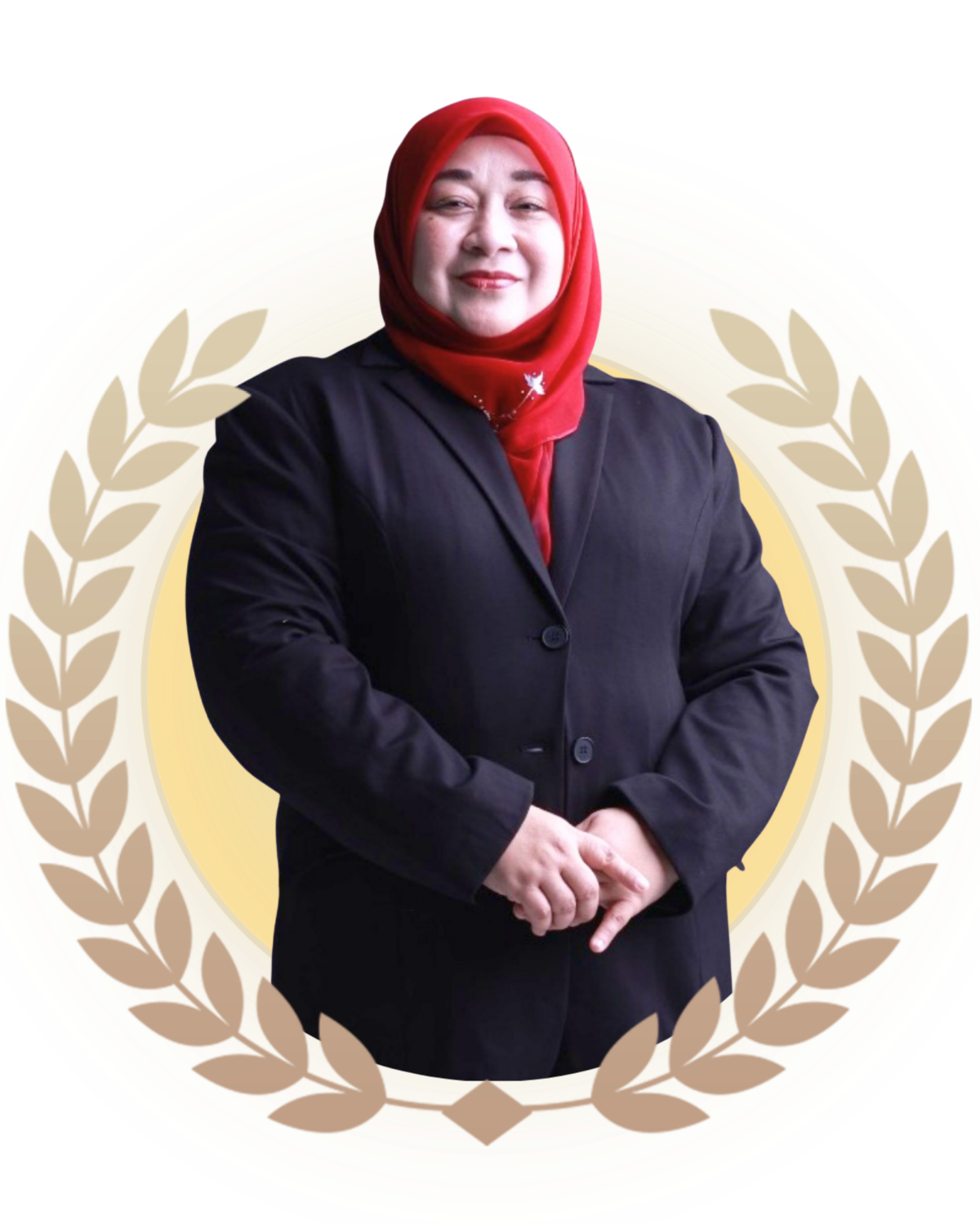
Plenary Speaker
Prof. Ts. Dr. Intan Zaurah Binti Mat Darus
Deputy Vice-Chancellor
(Academic & International),
Universiti Teknologi Malaysia (UTM)
Keynote 2: Collective Intelligence Pedagogy: From AI Assistance to Agentic AI Ecosystems
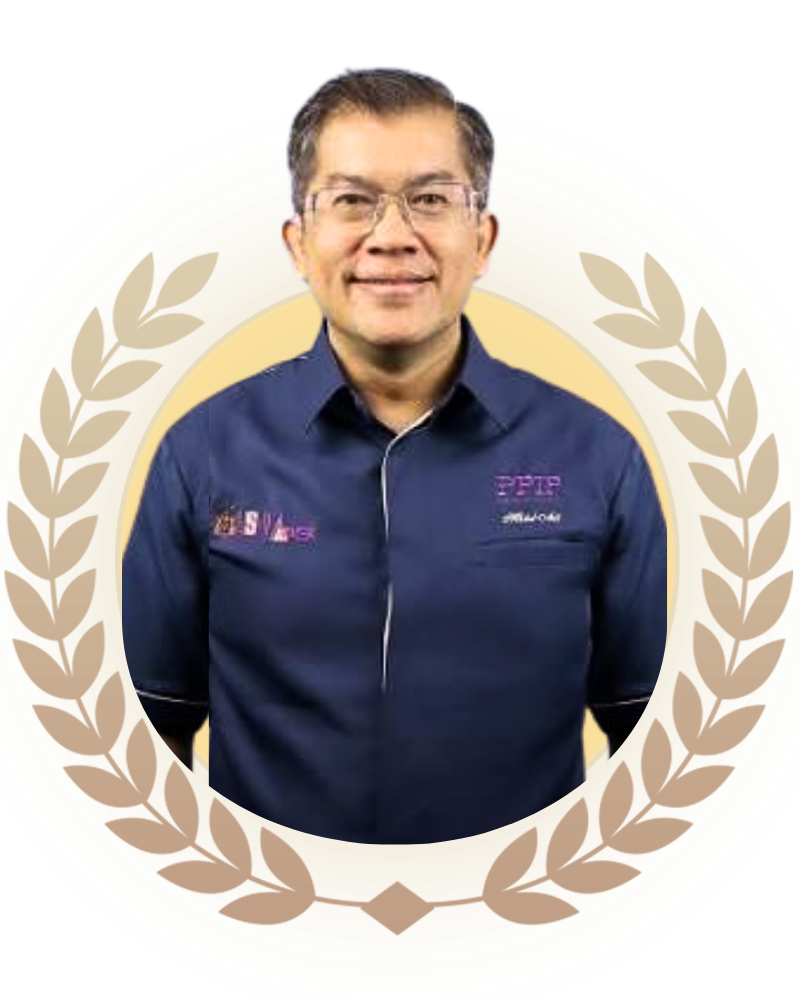
Keynote Speaker 2
Assoc. Prof. Dr. Mohd Ali Samsudin
Associate Professor,
School of Educational Studies,
Universiti Sains Malaysia (USM)

Plenary & Keynote Sessions
Prepare to be inspired by world-class perspectives that will challenge, empower, and reshape your future teaching philosophies. Our official speaker line-up and high-impact topics are currently being finalized and will be unveiled very soon.
Stay connected and don’t miss the opportunity to be part of this transformation!
Plenary Session: When AI Can Think, What Should We Teach?
Keynote 1: Redesigning Authentic Evaluation in the Age of Intelligent Learners

Keynote Speaker 1
Prof. Ts. Dr. Syamsul Nor Azlan Bin Mohamad
Director, Academic Assessment & Evaluation Division,
Universiti Teknologi Mara (UiTM)
Tab on the image below
to download / view
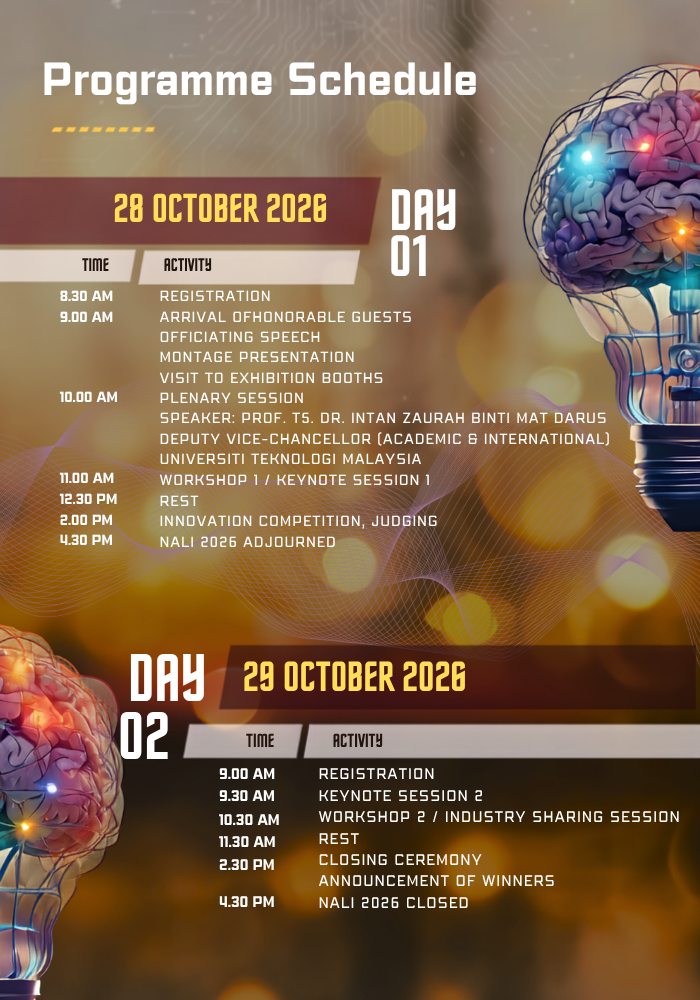
Programme Schedule
Plenary & Keynote Sessions
Prepare to be inspired by world-class perspectives that will challenge, empower, and reshape your future teaching philosophies. Our official speaker line-up and high-impact topics are currently being finalized and will be unveiled very soon.
Stay connected and don’t miss the opportunity to be part of this transformation!
Plenary Speaker
Prof. Ts. Dr. Intan Zaurah Binti Mat Darus
Deputy Vice-Chancellor (Academic & International),
Universiti Teknologi Malaysia (UTM)
Keynote 1 :
Keynote Speaker 1
Prof. Ts. Dr. Syamsul Nor Azlan Bin Mohamad
Director, Universiti Teknologi Mara (UiTM)
Keynote 2 :
Keynote Speaker 2
Assoc. Prof. Dr. Mohd Ali Samsudin
Associate Professor,
School of Educational Studies,
Universiti Sains Malaysia (USM)
28 OCTOBER 2026
8.30 am
9.00 am
10.00 am
11.00 am
12.30 pm
2.00 pm
4.30 pm
Registration
Arrival of Honourable Guests
Officiating Speech
Montage Presentation
Visit to Exhibition Booths
Plenary Session
Speaker: Prof. Ts. Dr. Intan Zaurah Binti Mat Darus
Deputy Vice-Chancellor (Academic & International)
Universiti teknologi malaysia
Workshop 1 / Keynote Session 1
Rest
Innovation Competition Judging
NALI 2026 Adjourned
day 02
29 OCTOBER 2026
Activity
9.00 am
9.30 am
10.30 am
11.30 am
12.30 pm
2.30 pm
Registration
Keynote Session 2
Workshop 2 / industry sharing session
Rest
Closing Ceremony
Announcement of Winners
NALI 2026 Closed

Workshop Speaker 1
Assoc. Prof. Ts. Dr. Mohd Norasri Bin Ismail
Associate Professor, Faculty of Computer Science and Information Technology,
Universiti Tun Hussein Onn Malaysia (UTHM)

NALI Workshop
Ready to master the future of education? Join the NALI 2026 Workshops to explore Human-AI Synergy in Pedagogy. Gain practical, hands-on skills with generative AI tools, design adaptive course materials, and transform your classroom strategies.
Don’t miss this prime opportunity to upskill. Secure your seat today!
Workshop 1: AI-Enhanced Pedagogy for Assessment: Rethinking Assessment in the Age of Generative A.I.
Workshop 2: Human-in-the-Loop Pedagogy: Making Better Teaching Decisions with AI

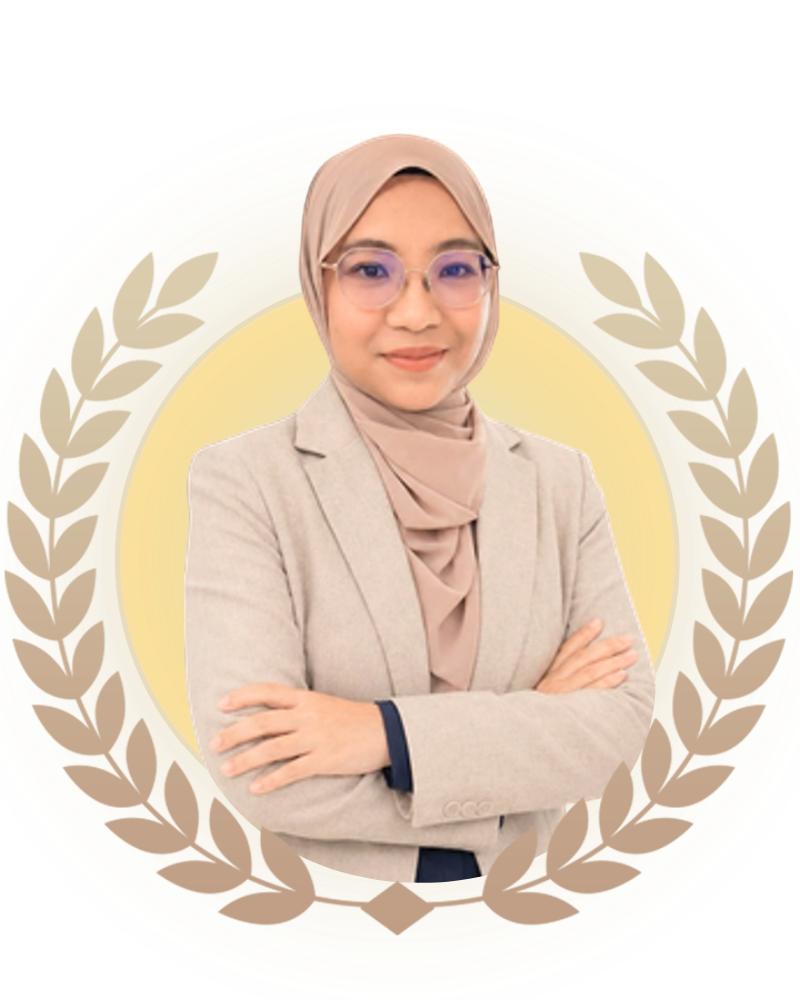
Workshop Speaker 2
Dr. Nor Nabiha Md Zan
Accredited HRD Corp Trainer & Consultant
Chemsynth Solutions
NALI Workshop
Ready to master the future of education? Join the NALI 2026 Workshops to explore Human-AI Synergy in Pedagogy. Gain practical, hands-on skills with generative AI tools, design adaptive course materials, and transform your classroom strategies.
Don’t miss this prime opportunity to upskill. Secure your seat today!
Workshop 1 :
Workshop Speaker 1
Assoc. Prof. Ts. Dr. Mohd Norasri Bin Ismail
Associate Professor, Faculty of Computer Science and Information Technology,
Universiti Tun Hussein Onn Malaysia (UTHM)
Workshop 2 :
Workshop Speaker 2
Dr. Nor Nabiha Md Zan
Accredited HRD Corp Trainer & Consultant
Chemsynth Solutions

Innovation Competition & Exhibition
Downloads
Event Overview
The NALI 2026 Innovation Competition and Exhibition provides a platform for educators, researchers, students, industry practitioners and educational innovators to showcase impactful innovations in teaching, learning and assessment.
Aligned with the NALI 2026 overarching theme, “Human-AI Synergy in Pedagogy” the competition welcomes educational practices, projects, products, technologies and learning solutions that demonstrate originality, pedagogical value, practical applicability and measurable educational impact.
Participants may submit an innovation in the form of a:
- Practice: An innovative teaching, learning or assessment practice that improves the educational experience or learning outcomes.
- Project: A structured educational initiative, intervention or programme addressing an identified teaching or learning need.
- Product: A tangible or digital educational resource, application, platform, tool, module or technology developed based on sound pedagogical principles.
Eligibility & Competition Categories
Eligibility
The competition is open to educators, researchers, students, educational institutions, government agencies, non-governmental organisations, industries and other individuals or teams involved in educational innovation.
Competition Categories
Submissions should address at least one of the following five competition categories:
1. Innovation in Pedagogy, Assessment and Curriculum Design
2. Artificial Intelligence-Enhanced Teaching and Learning
3. Digital, Immersive, and Flexible Learning Ecosystem
4. Inclusive and Accessible Digital Education
5. Lifelong Learning
Category 1: Innovation in Pedagogy and Assessment
This category recognises innovative approaches that improve teaching practices, learning experiences and assessment processes. Relevant innovations may include:
- Innovative pedagogical models and instructional strategies
- Student-centred, collaborative or experiential learning
- Authentic, alternative and competency-based assessment
- Digital assessment and feedback approaches
- Approaches that strengthen academic integrity
- Innovative curriculum and course design
- Evidence-based improvements in student engagement and achievement
Category 2: AI-Enhanced Teaching and Learning
This category focuses on the responsible and human-centred application of artificial intelligence to enhance teaching, learning and assessment. Relevant innovations may include:
- Generative AI applications for teaching and learning
- AI-powered educational chatbots and intelligent tutoring systems
- Adaptive and personalised learning
- AI-supported assessment and feedback
- Learning analytics and predictive systems
- AI literacy and responsible AI education
- Ethical, transparent and inclusive use of AI
- Human-AI collaboration in educational practice
Category 3: Digital, Immersive and Flexible Learning Ecosystems
This category recognises digital environments and flexible learning models that enable engaging learning across different locations, platforms and modes of delivery. Relevant innovations may include:
- Blended, hybrid and online learning
- Open and Distance Learning
- Virtual, augmented and mixed reality
- Simulations, virtual laboratories and immersive learning
- Digital learning platforms and ecosystems
- MOOCs, micro-credentials and stackable learning pathways
- Flexible and personalised learning models
- Technology-supported collaborative learning environments
Category 4: Inclusive and Accessible Digital Education
This category focuses on innovations that ensure equitable access to meaningful and high-quality educational experiences. Relevant innovations may include:
- Universal Design for Learning
- Assistive and accessible educational technologies
- Inclusive learning resources and assessment practices
- Learning solutions for students with diverse abilities and needs
- Low-bandwidth and mobile-friendly learning solutions
- Multilingual and culturally responsive education
- Initiatives that reduce the digital divide
- Educational solutions for underserved or marginalised communities
Category 5: Lifelong Learning
This category recognises innovations that support continuous learning, professional development, upskilling and reskilling across different stages of life and employment. Relevant innovations may include:
- Professional and continuing education
- Workforce upskilling and reskilling
- Industry-based and work-integrated learning
- Community and adult education
- Short courses, micro-credentials and professional certifications
- Recognition of prior learning
- Flexible and stackable learning pathways
- Personalised learning for career and professional development
Participation and Submission Guidelines
Project Originality and Enhancement
Submitted innovations should demonstrate originality and a clear contribution to educational practice. Projects previously entered in other competitions, including earlier NALI events, may be resubmitted only if they incorporate substantial enhancements, new features or clearly differentiated improvements.
Individual and Team Participation
Participants may submit entries individually or as part of a team, including teams comprising members from different institutions. Multiple submissions are permitted; however, each innovation must be registered separately and is subject to an individual registration fee.
Author Limit
Each submission may include a maximum of ten authors. Names listed beyond the tenth author will not be included in the official NALI 2026 conference proceedings.
Extended Abstract Requirements
Each submission must be accompanied by a three- to four-page extended abstract, inclusive of references and acknowledgements. The abstract must be written in English and prepared using the official Extended Abstract Template.
Mode of Presentation
All presentations must be delivered physically at the event venue. Virtual or online presentations will not be accepted. Recommended to print A1-size poster. Poster Template
Registration Fees and Key Deadlines
Registration will be considered complete only after the participant clicks “Submit”. Entries saved as “Draft” will not be accepted. Participants must also upload the following three required documents: the Extended Abstract, Project Poster and Proof of Payment.
| Registration Type | Timeline (2026) | Fee per Entry |
| Early Bird | 20 July – 3 August | RM 300.00 |
| Normal Price | 4 August – 15 September | RM 350.00 |
Cancellation and Refund Guidelines
Voluntary Withdrawal
Requests submitted to nali@utm.my by 1st September 2026 are eligible for a 50% refund.
Incomplete Registration
Disqualified entries due to incomplete registration may receive an 80% refund if payment has been processed.
Non-Attendance
Participants who do not attend the physical exhibition without prior notice will not receive a refund.
Judging and Presentation
- Judging will take place at the exhibition booths on 28 October 2026, from 2.00 p.m. to 4.00 p.m. Each entry will be assessed by at least two judges.
- Presenters will have seven minutes to pitch their innovation, followed by a three minutes question-and-answer session.
- Each booth will be provided with one table, two chairs, one display board and one extension socket. Participants are required to bring a printed A1-size poster.
- Participants must print and display the official project poster at their own expense. Supporting materials, such as brochures, demonstration items and certificates, are encouraged. Poster Template
Judging Procedures and Evaluation Criteria
Judging will be conducted at the exhibition booths on 28 October 2026, from 2.00 p.m. to 4.00 p.m. Each entry will be assessed by at least two judges through a seven-minutes presentation followed by a three-minutes Q&A session.
Participants must print and display the official poster, highlighting the project objectives, novelty, innovation and relevance to NALI. Supporting materials are encouraged.
- Please ensure that your poster is displayed at the assigned booth by the morning of 28 October 2026 and remains on display until the end of the event on 29 October 2026. At least one team representative must be present at the booth throughout both days to present the innovation and engage with visitors.
Evaluation Rubrics
Each innovation will be assessed according to the following criteria and corresponding weightage:
1. Extended Abstract (10%)
Clearly and concisely presents the subject, context and background of the project, with a coherent link to its purpose and investigation.
2. Poster (15%)
Demonstrates excellence in visual design, layout, organisation, content clarity and overall presentation.
3. Novelty (10%)
Demonstrates original ideas that extend beyond existing practices and are presented in distinctive and meaningful ways.
4. Creativity (10%)
Shows imaginative and well-designed ideas that introduce new perspectives to teaching and learning.
5. Innovativeness (10%)
Demonstrates significant improvements or transformations to conventional teaching and learning practices, resulting in a novel educational experience.
6. Applicability (10%)
Provides evidence of effectiveness, practicality and consistent application of relevant NALI learning approaches, methods or materials.
7. Impact on Student Learning (20%)
Demonstrates significant and sustainable improvements in student engagement, empowerment or learning outcomes, supported by systematic evidence or measurement.
8. Presentation (15%)
Communicates the project clearly, accurately and confidently, with effective delivery, appropriate pacing, audience engagement and suitable presentation aids.
Awards and Recognition
Based on the final scores awarded according to the evaluation rubric, eligible innovations will receive one of the following awards:
- Gold Medal
- Silver Medal
- Bronze Medal
Entries that do not meet the minimum award threshold will receive a Certificate of Participation.
Outstanding Gold Medal recipients will also be considered for the prestigious NALI Best of the Best Award. All decisions made by the judging panel are final.

NalI Award
Open to all UTM staff
NALI Award recognizes and celebrates educators who have made significant contributions in the field of education through innovative teaching practices and approaches. This award honours individuals or teams that have demonstrated creativity, ingenuity, and forward-thinking in revolutionizing the way students learn and engage with educational content.
Criteria
This award is open to all UTM staff.
Applicants are required to meet the following criteria:
1. NALI-Driven
The submission must demonstrate the application of New Academia Learning Innovation (NALI) principles in enhancing teaching and learning.
2. Outstanding Achievement
The submission should demonstrate outstanding achievements or a proven track record, such as:
• Awards
• Medals
• Research or innovation grants
• Publications
Participation and achievements in other teaching and learning competitions will also be taken into consideration.
3. Submission Category
The submission must fall under one of the following categories:
+ Practice
A transformative teaching practice that enhances student engagement and learning outcomes.
+ Project
A student-centred project that creates an authentic, experiential, and immersive learning environment.
+ Product
An innovative learning material or educational product developed based on sound pedagogical principles that:
• Enhances learning and teaching;
• Integrates appropriate technologies; and
• Incorporates elements of Higher Education 4.0.
4. Evidence of Implementation
The submitted Practice, Project, or Product must have been implemented for a minimum of *two (2) semesters* and be supported by evidence demonstrating:
• Effectiveness;
• Impact on student learning;
• Student or stakeholder feedback (where applicable); and
• Continuous quality improvement.
5. Submission Compliance
Only complete submissions that fulfil all award requirements will proceed to the evaluation stage. The Organising Committee reserves the right to reject incomplete, inaccurate, or non-compliant submissions without further review.
- Please be informed that your application only needs to be submitted through the system. No physical presentation is required.
- During the NALI event on 28–29 October, you are warmly invited to attend and support the event.
- The winners will be announced during the Closing Ceremony on 29 October 2026 to receive their awards.
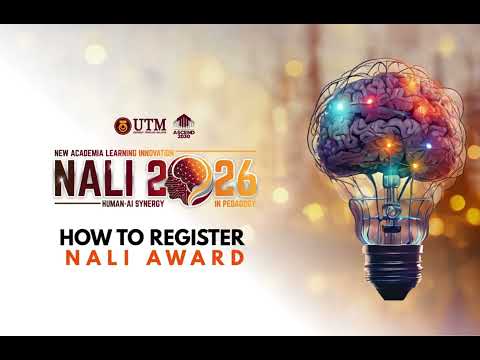
6. How to Register
To submit your application, simply follow the step-by-step registration guide provided in the instructional video below.


NalI Educator Award
Open to all UTM staff ( by invitation )
NALI Educator Award is a recognition that celebrates excellence in education and acknowledges educators who have made significant contributions to the field of teaching and learning. This award honours individuals that displayed a passion for their subject matter, an understanding of pedagogy, and fostering a love for learning and instilling lifelong skills as a teacher.
Candidates for the NALI Educator Award are evaluated based on various criteria, including their impact on student learning outcomes, their ability to adapt teaching methods to different learning styles and needs, their use of innovative approaches and technologies, and their contributions to the overall improvement of education.
Criteria
This award is for invited UTM staff only
(the award is strictly for UTM staff members who have received an invitation)
We look for participation that has the following criteria:
- NALI Driven
- Outstanding achievement or track record (Awards / Medals/ Grants/ Publications)
- Track records from participation in other teaching and learning competitions will also be considered.
- It can be a Practice/Project/Product:
- Practice-Transformative Teaching that results in improved student
engagement and achievement in learning. - Project-Student centered project that implements authentic/immersive
learning environment.
Product-An innovative output of learning materials based on good pedagogical principles for improved student learning.
- Has impact on learning and teaching
- Integrates technology
- Incorporates elements of Higher Education 4.0
NALI Educator Award Finalist 2026
🌟 Prof. Madya Ts. Sr. Dr. Nurul Hazrina binti Idris (FABU)
🌟 Prof. Ts. Dr. Maslin binti Masrom (FAI)
🌟 Dr. Farkhana binti Muchtar (FC)
🌟 Dr. Nina Diana binti Nawi (FEST)
🌟 Dr. Norelyza binti Hussein (FKA)
🌟 Dr. Siti Zaleha binti Omain (FM)
🌟 Dr. Nor Ain binti Husein (FS)
🌟 Dr. Muhammad Talhah bin Jima’ain (FSSH)
IMPORTANT DATES
Nali Award

Open submission
20 july 2026

Submission Deadline
Innovation Competition & Exhibition
Registration Open
20 july 2026

Registration Deadline (early bird)
3 august 2026
Final Registration Deadline

NALI 2026 Event

28 - 29 October 2026
Save
Locations
Event Venue
UNIVERSITI TEKNOLOGI MALAYSIA
Accommodation
Nearest Hotels
to Universiti Teknologi Malaysia
SCHOLAR’S INN UTM
SCHOLAR’S INN UTM
Universiti Teknologi Malaysia
81310 UTM Johor Bahru, Johor.
07-553 5197
07-553 6695
WhatsApp : 601119785181
scholarsinn@utm.my
U-HOTEL
HOTEL AUSTIN PARADISE (BRANCH)
No. 75, 77 & 79, Jalan Pulai 7,
Taman Pulai Utama,
81300 Skudai, Johor
07-5206888
07-5201888
GRAND PARAGON HOTEL
18, Jalan Harimau,
Taman Century
80250 Johor Bahru, Johor
07-268 5222
07-268 5222
07-268 5331
resv@grandparagonhotel.com.my
IMPIANA HOTEL SENAI
Jalan Impiana Senai Utama 2,
Taman Impian Senai, 81400 Senai, Johor
60 7-521 2121
enquiry@pulaisprings.com
APOLLO HOTEL
KSL RESORT JOHOR BAHRU
33 Jalan Seladang, Taman Abad,
80250 Johor Bahru,
Malaysia
GOODHOPE HOTEL
No. 1, Jalan Ronggeng 5,
Taman Skudai Baru
Skudai, Johor Bahru
81300 Johor
07-557282
reservation@goodhopehotel.com.my
CONTACT US
General Enquiry

Pn. Noraini Khalid
E-Mail: nali@utm.my
NALI Award Enquiry

Assoc. Prof. Dr. Mohd Nihra Haruzuan Mohamad Said
E-Mail: nihra@utm.my
Innovation Competition & Exhibition Enquiry

Dr. Noraini Ibrahim
E-Mail: noraini_ib@utm.my
